Syed Suhail Ahmad

Syed Suhail Ahmad, Author at Next Wisdom

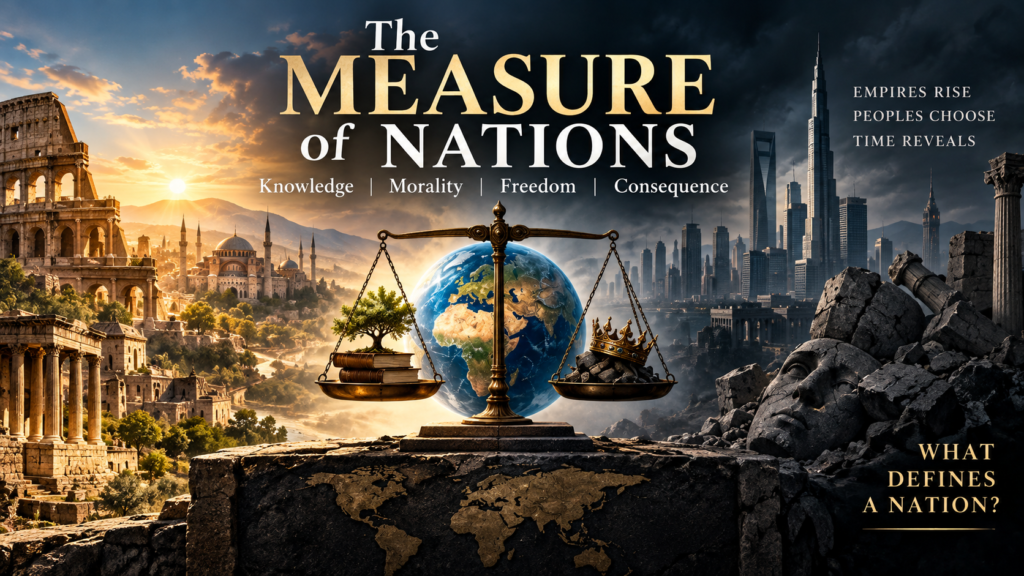
The Measure of Nations

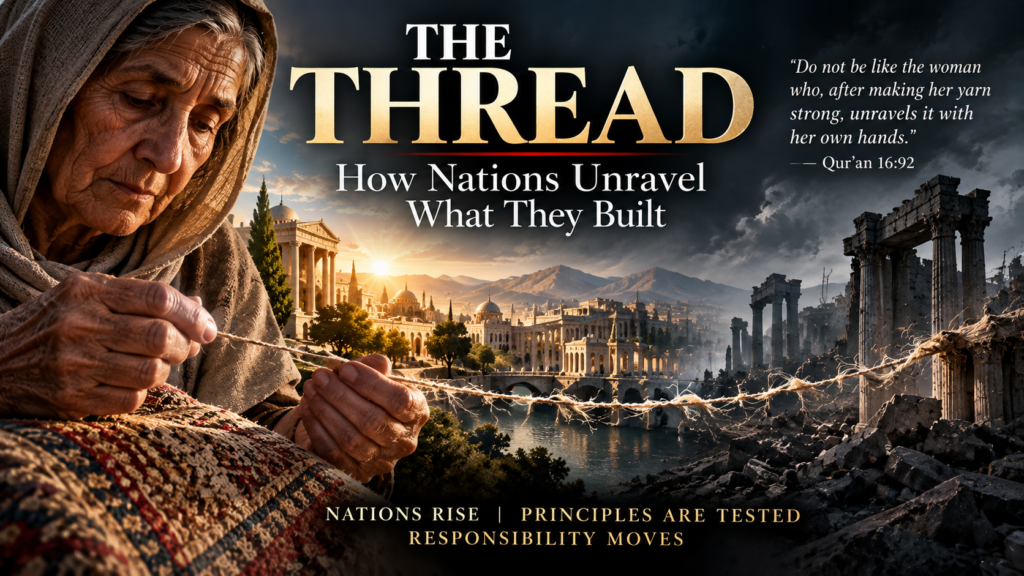
(Knowledge, Morality, Freedom, and the Rise and Fall of Civilizations) Nations often behave as though permanence is one of the privileges of power. A civilization reaches the height of its influence. Its armies appear unbeatable, its economy touches distant shores, its institutions command respect, its language travels beyond its borders, and its leaders begin to […]

The Measure of Nations Read More »

Nations, ,

The Footnote: Where Understanding Begins After the Sentence Ends

(Why serious thinking requires us to follow ideas beyond the words immediately before us) A researcher sits alone in an old library. Before her lies a historical document. One sentence has been underlined: “The city refused.” The statement appears straightforward. The city refused. But refused what? She continues reading and notices a tiny number beside

The Footnote: Where Understanding Begins After the Sentence Ends Read More »

Critical Thinking, , ,

The Witnesses: When Honest People See Different Truths

(How perspective shapes what we know—and why disagreement does not always require deception) Five people stand at five different windows overlooking the same intersection. An accident happens below. A pedestrian falls. A blue car stops abruptly. A motorcycle skids across the road. People begin running toward the scene. Later, investigators question the witnesses separately. The

The Witnesses: When Honest People See Different Truths Read More »

Critical Thinking, , , , ,

The Same Sentence: Why Words Alone Are Not Always Enough

How context transforms language into meaning Two people can say exactly the same sentence and mean entirely different things. Imagine five people saying only two words: “You came.” A mother sees her estranged son entering a hospital after she has desperately tried to reach him. “You came.” Relief. A woman sees someone she fears unexpectedly

The Same Sentence: Why Words Alone Are Not Always Enough Read More »

Critical Thinking, , ,

The Missing Frame | What You Saw Was Real. But Was It the Whole Story?

What if everything you were shown was true—and yet the conclusion you reached was wrong? The Missing Frame is a cinematic exploration of one of the most subtle problems in human judgment: a fact does not have to be false to create a false understanding. Sometimes, it only has to be separated from the context

The Missing Frame | What You Saw Was Real. But Was It the Whole Story? Read More »

Critical Thinking, , , ,

Seeing Problems in Context

(From Crisis Thinking to Confident Problem-Solving) A problem does not enter the mind only as an event. It also enters through our interpretation of the event. Two people may encounter exactly the same difficulty and experience it very differently. One sees a crisis; the other sees something inconvenient but manageable. The external situation may be

Seeing Problems in Context Read More »

Life Challenges,

Maazi ki Qaid — The Prison of the Past

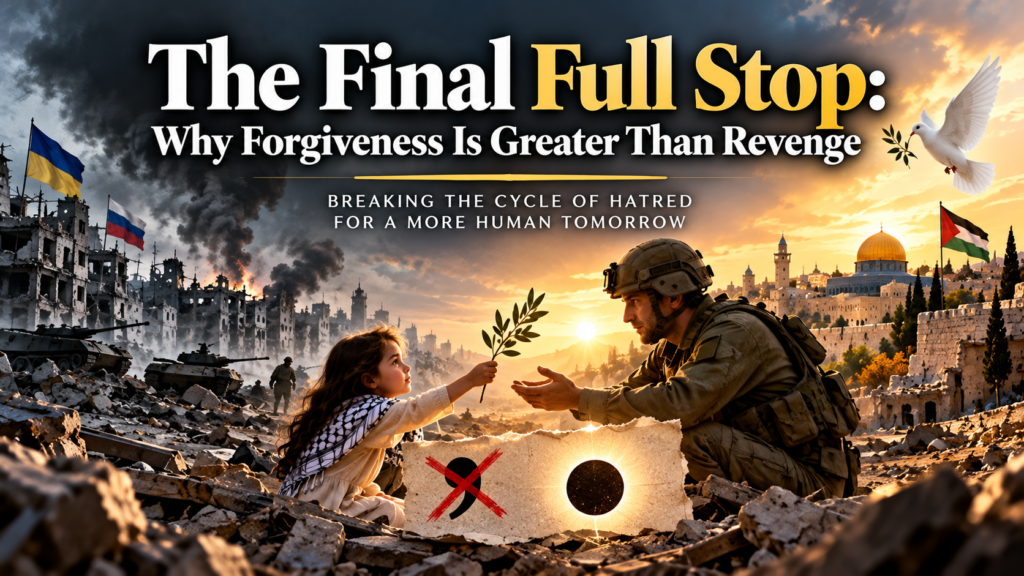
“Maazi ki Qaid” (The Prison of the Past) is a philosophical Urdu song about one of the great contradictions of our time: humanity has developed the tools of the future, yet our thinking can remain imprisoned in the past. We have reached beyond the skies, connected voices across the world, created artificial intelligence, and developed

Maazi ki Qaid — The Prison of the Past Read More »

History, War, ,

When Nations Forget the Creation Plan

Power, Freedom, Sovereignty, and the Purpose of Human Life Many of the problems humanity creates for itself may begin with a deeper intellectual failure: we forget the purpose for which human beings were placed on Earth. Wars, occupations, persecution, forced regime change, enslavement, political repression, exploitation, and struggles for domination are usually explained through economics,

When Nations Forget the Creation Plan Read More »

God the Almighty, , ,