Religion

Blog

These are my articles written over time. Please feel free to ask questions about any post.

When Truth No Longer Moves The Heart
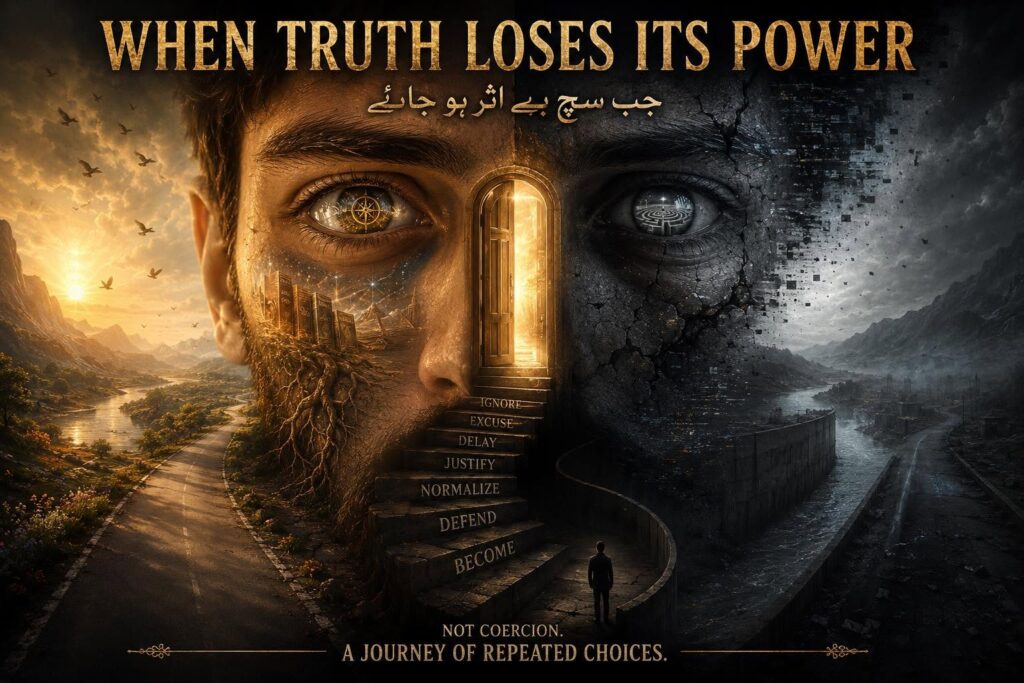
This piece “Jab Sach Be Asar Ho Kaye” (“When Truth No Longer Moves the Heart”) (See Urdu poetry https://youtu.be/Ki15vILbZKA and English poetry https://youtu.be/7E5_Nld4vKY) is describing what classical Islamic theology often calls the Sunnatullah (Divine Law) of Guidance and Misguidance: 1. Truth is presented. 2. Human beings are given intellect (`aql), conscience, signs, reminders, and opportunities. […]

When Truth No Longer Moves The Heart Read More »

Religion, , , ,
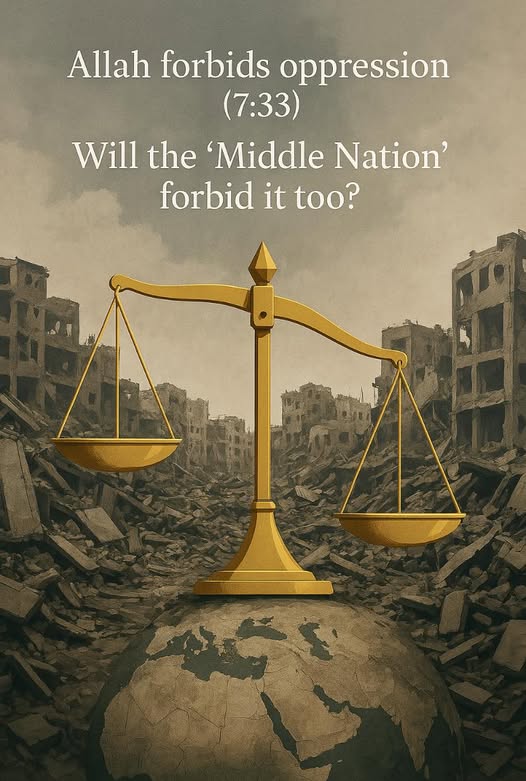
Carrying the Torch: Upholding the Mission of the Middle Nation

In the Qur’an, the Muslim community is described as a “Middle Nation” (Ummatan Wasatan)—not merely a cultural or geographic identity, but a role charged with eternal responsibility. This is not a passive honor, but a living torch passed from prophet to community, a sacred trust to uphold justice, preserve moral clarity, and reflect divine guidance

Carrying the Torch: Upholding the Mission of the Middle Nation Read More »

Religion, , , ,

Middle in Position, Middle in Principle

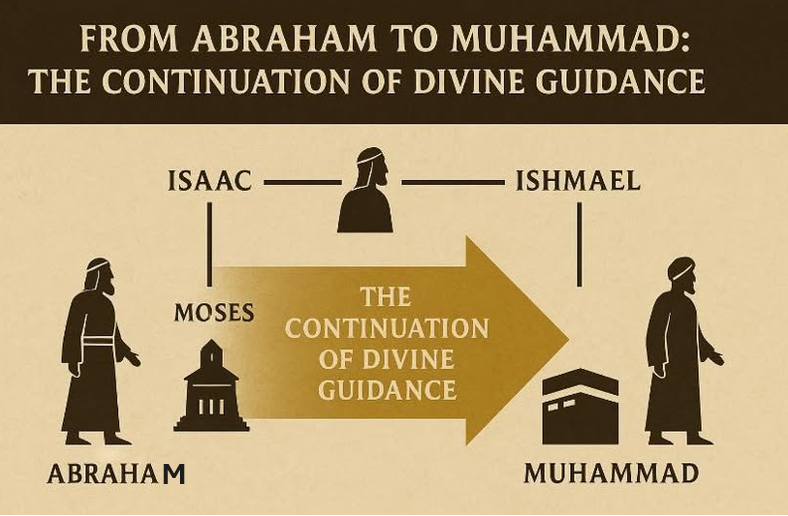
(The Role of the Final Nation and the Continuity of Prophetic Religion) Islam was never meant to be a “new religion.” It is the continuation and culmination of a divine mission that began with Adam and was carried forward by a chain of prophets—Noah, Abraham, Moses, Jesus, and finally, Muhammad (peace be upon them all).

Middle in Position, Middle in Principle Read More »

Religion

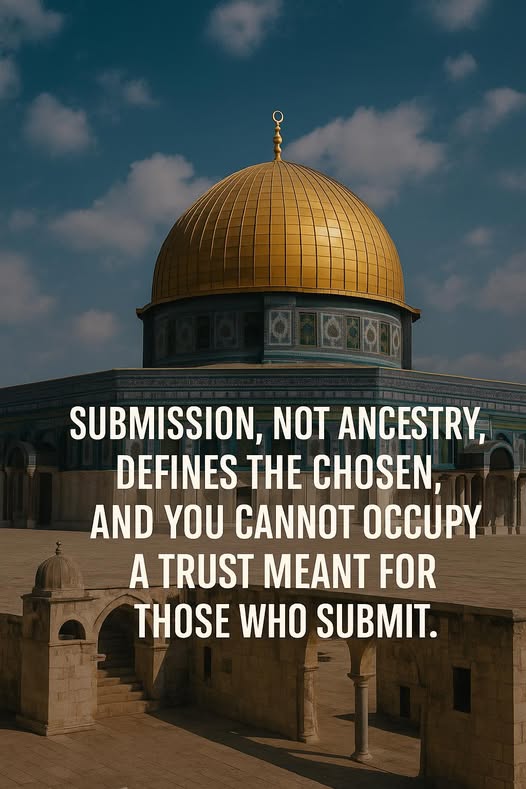
Jerusalem and Palestine: Responsibility, Rejection, and the Role of the Middle Nation

In the divine system outlined in “The Architecture of Submission,” religion is not a cultural artifact or a tribal identity—it is a structured way of life anchored in surrender to the will of the Creator. With this framework in mind, the ongoing conflict over Jerusalem and Palestine must be re-examined not as a political dispute

Jerusalem and Palestine: Responsibility, Rejection, and the Role of the Middle Nation Read More »

Religion, , ,

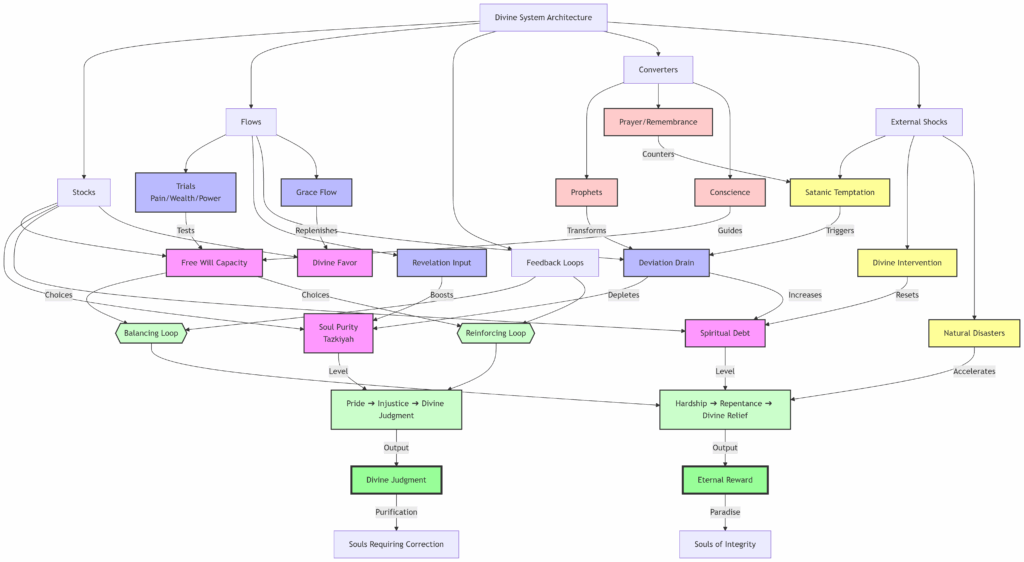
The Architecture of Submission — Religion as a Divine System

Introduction: A Unified Lens To truly grasp the Almighty’s plan for humanity, we must move beyond fragmented views of history, religion, and scripture. What if the stories of Adam, Noah, Abraham, Moses, Jesus, and Muhammad (peace be upon them all) weren’t separate religious traditions—but chapters in a single, continuous divine system? Systems thinking, a discipline

The Architecture of Submission — Religion as a Divine System Read More »

Religion, , , ,

The Middle Nation: A Divine Continuation of Monotheism

Throughout human history, God has guided humanity through prophets and messengers. Before the time of Prophet Abraham (Ibrahim, peace be upon him), divine guidance was decentralized—prophets were sent to different corners of the world, to each tribe or nation, suited to their context, language, and societal development. These messengers invited people to the universal truth:

The Middle Nation: A Divine Continuation of Monotheism Read More »

Religion, ,

The Scheme and Purpose of Life — Understanding God’s Test and Human Responsibility

Throughout the prophetic era, all prophets and messengers were sent to remind humanity of the purpose of life’s tests and the reality of the life to come. Their essential message was that God, the Almighty, chose to create a being who could, through their own actions and choices, attain eternal life. They also taught that

The Scheme and Purpose of Life — Understanding God’s Test and Human Responsibility Read More »

Life, Next Life, Religion, Spirituality, , , , , ,

The Power of Human Creativity in Shaping Schools of Thought and Religions

Human beings possess an innate drive for discovery and imagination, traits that have fueled advancements in science, art, philosophy, and spirituality. These qualities enable people to explore the unknown, conceptualize the unseen, and make sense of the mysteries that surround existence. This same creativity and imagination, when applied to divine knowledge, have played a pivotal

The Power of Human Creativity in Shaping Schools of Thought and Religions Read More »

Religion, , ,

Ethics in action: The true essence of faith

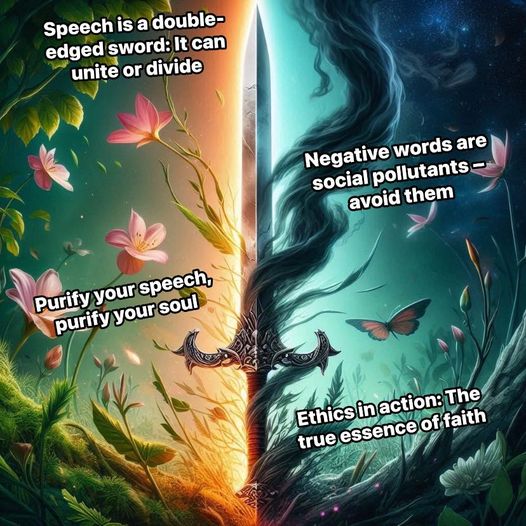
The essence of faith lies in the purification (Tazkiyah in Arabic) of one’s ethics and morality. All teachings of faith are designed to refine and elevate ethical values. Whether one is discussing politics, economics, or conducting business, it should be approached from an ethical standpoint. Every action should be guided by principles of ethics. For

Ethics in action: The true essence of faith Read More »

Religion, , , ,