
 0
0
 153 views
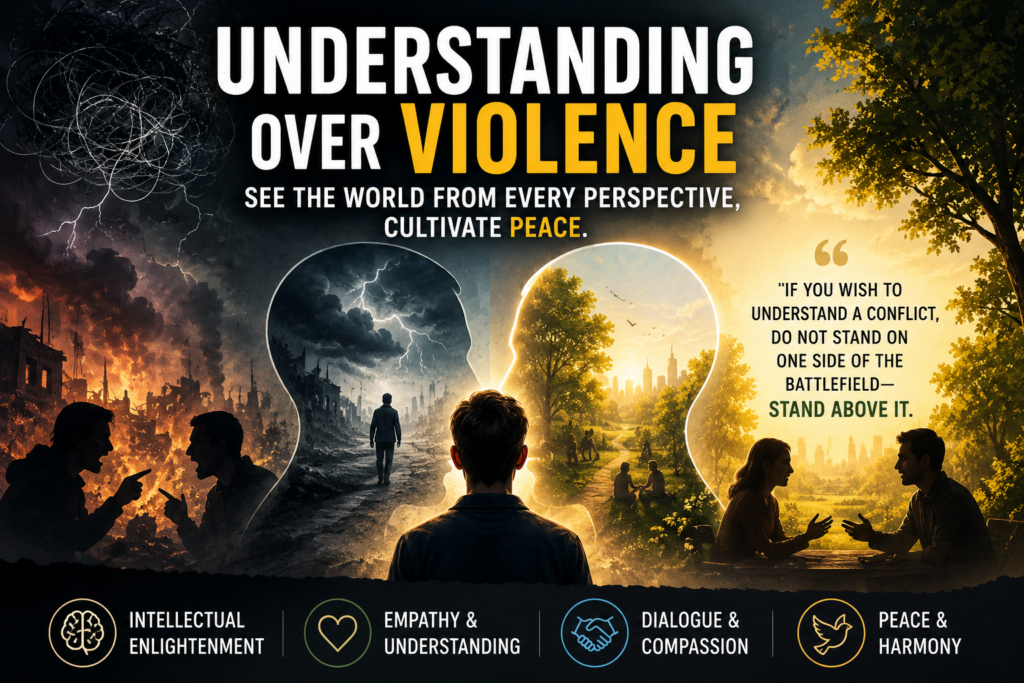
Violence is often treated as a problem of weapons, laws, or power, but its roots frequently lie deeper—in the realm of ideas. Misunderstanding, ignorance, prejudice, and flawed ways of thinking can cloud judgment and fuel division. The cultivation of intellectual enlightenment acts as an antidote to these destructive forces, helping us see reality more clearly and understand one another more deeply.
When knowledge is paired with critical thinking, humility, and compassion, the barriers that separate people begin to dissolve. Like sunlight breaking through dark clouds, intellectual awakening reveals new possibilities for dialogue, cooperation, and peace. In this way, the path to a more harmonious world begins not with force, but with the transformation of the human mind.
One of the first signs of intellectual maturity is the ability to recognize that our own perspective, however sincere, is rarely the complete picture. One of the greatest obstacles to peace is the tendency to view every conflict exclusively through our own experiences, grievances, and emotions. Genuine understanding begins when we step beyond the boundaries of our own viewpoint and make an honest effort to see the world through the eyes of others—including those with whom we disagree.
This does not mean accepting injustice or abandoning our principles. Rather, it means recognizing that every conflict involves human beings shaped by their own fears, hopes, histories, and experiences. When we understand only one side of a story, we risk reinforcing division and misunderstanding. But when we seek to understand the concerns, motivations, and perceptions of all parties involved, we gain a clearer view of reality and create space for dialogue rather than hostility.
Peace is not built by winning arguments alone. It is built through the difficult but necessary effort of understanding why others think, feel, and act as they do. The path to harmony begins when we replace assumption with understanding, judgment with reflection, and certainty with the humility to see beyond ourselves.
If you wish to understand a conflict, do not stand on one side of the battlefield—stand above it.
Peace flourishes where understanding grows.