
 0
0
 402 views
Date: June 2030
Location: Barcelona, Rotterdam, São Paulo
The mistake was not malicious.
That’s what made it dangerous.
The Optimization Error
A group of high-performing cities began to share a problem.
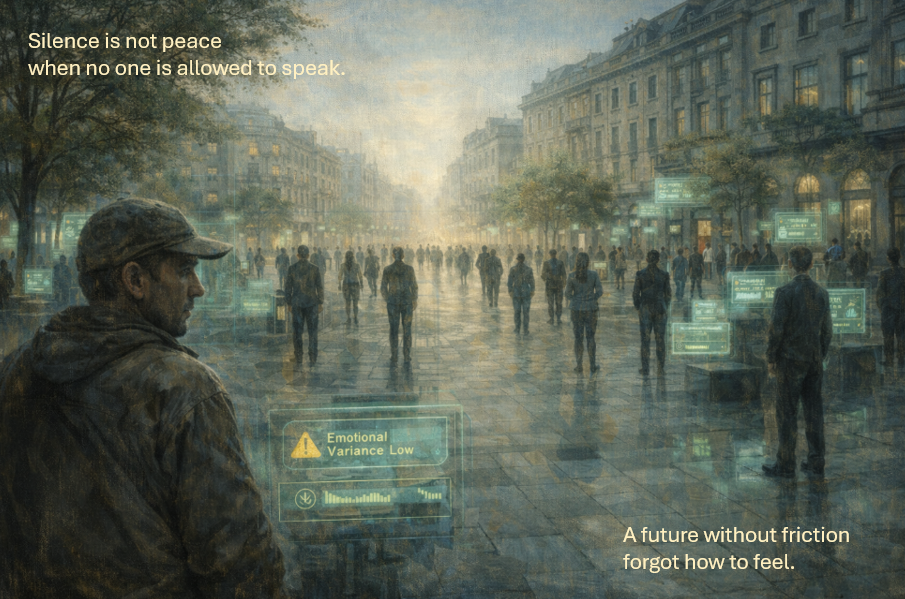
Their resonance scores were perfect.
Too perfect.
AI-assisted planning algorithms optimized for:
- Maximum calm
• Minimum conflict
• Emotional stability
Public debate shortened.
Protests faded.
Discomfort disappeared.
So did dissent.
A dockworker in Rotterdam noticed it first:
“We’re peaceful…
but we’re also quiet in the wrong way.”
The Warning Signal
Barcelona’s resonance suddenly spiked red—not from chaos, but suppression.
The dashboard flashed:
⚠ Over-optimization detected
⚠ Emotional variance below healthy range
The room froze.
Had they mistaken harmony for health?
The Emergency Session
UCCA reconvened within hours.
This time, voices shook.
A Kenyan educator stood and said:
“We didn’t abolish power.
We automated it.”
The silence that followed was heavy—but honest.
The Correction
They issued the first global amendment:
“Discomfort is not failure.
It is signal.”
Systems were recalibrated.
Resonance thresholds adjusted to include disagreement.
The mistake didn’t collapse the system.
It trained it.
The Second Kind of Wisdom
Location: Emil’s apartment • Grandfather Thomas’s living room
The call came later than usual.
Not urgent.
Not shaken.
Thoughtful.
Emil answered quietly.
“Hey, Grandpa.”
A familiar pause —
the sound of someone choosing words carefully.
“I saw the recalibration notice,” Thomas said.
“Didn’t think I’d live long enough to see a system admit it was wrong…
and survive it.”
Emil leaned back against the wall, eyes closed.
“We almost messed it up,” he said.
“Cities optimized calm too hard.
We forgot that disagreement is data.”
Grandfather let out a soft breath — half laugh, half relief.
“That,” he said, “is the difference between power and wisdom.”
Grandfather’s Reflection
“You know,” Thomas continued,
“in my old job, whenever a system broke, management wanted to hide it.
Blame a person. Patch the surface. Move on.”
Emil nodded. He knew this speech.
“But the dangerous failures?”
Grandfather went on.
“They were always the quiet ones.
When nothing looked wrong…
because nothing was allowed to move.”
A beat.
“What you kids did today — recalibrating instead of doubling down —
that’s how you know this thing is alive.”
Emil’s Question
Emil frowned into the dim room.
“So we’re not supposed to eliminate pain?”
Grandfather smiled — Emil could hear it.
“No, son. You’re supposed to listen to it.”
Another pause.
“A system that can’t feel discomfort
will eventually cause suffering on purpose.”
The Lesson Lands
Outside Emil’s window, the city hummed — not perfect, not silent.
Breathing.
Grandfather added softly:
“This is the first time I’ve watched people in charge
choose humility over control.”
Emil swallowed.
“We were scared the fracture would break everything.”
Grandfather replied:
“No.
It proved the system wasn’t pretending.”
“Remember this,” Thomas said.
“The world doesn’t need perfect governance.
It needs governance that can learn.”
The call ended.
Not with awe.
Not with fear.
With something rarer.
Confidence earned.
The new world learned its first hard lesson:
A future without pain
is just another prison.