
 0
0
 414 views
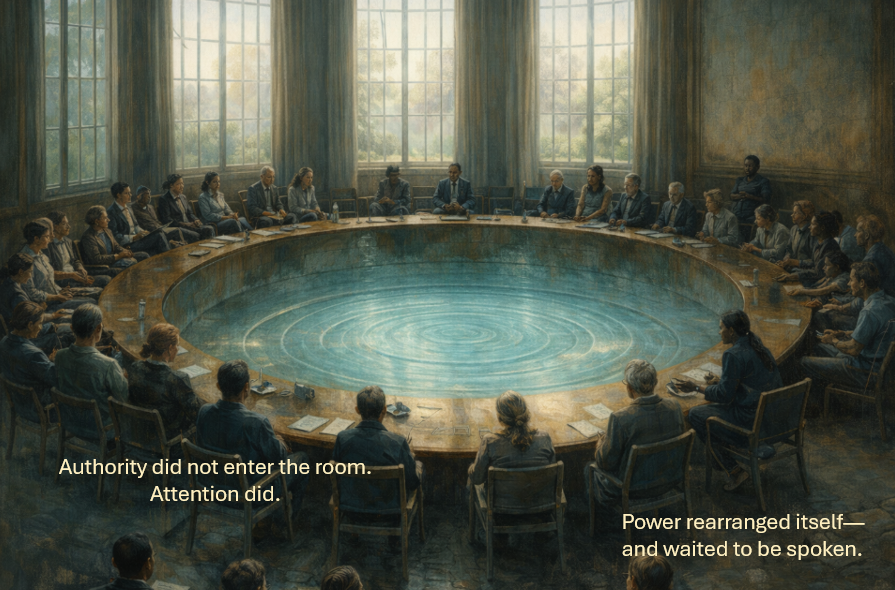
Date: April 2030
Location: The Former UN Trusteeship Council Chamber
They didn’t call it a parliament.
They called it a circle with walls.
The United Coalition of City Assemblies (UCCA) convened not with flags, anthems, or seating charts—but with a single shared instruction posted at every entrance:
“Leave your title at the door.”
Representatives arrived from cities, not states.
Some were mayors.
Some were nurses.
Some were transit planners, teachers, or farmers.
All of them had been chosen by resonance, not elections.
No gavels were used.
No agenda was enforced.
A quiet AI display showed one thing only:
Collective coherence level.
When it dipped, discussion paused.
Not to punish—but to breathe.
The First Decisions
The first motions were modest:
- Coordinating disaster response between cities
• Mutual recognition of healthcare access
• Emergency migration corridors
• Shared data standards for breath metrics
Nothing revolutionary.
That was the revolution.
A Brazilian delegate said softly:
“We are learning how not to dominate.”
Applause felt unnecessary.
Amara’s Role
Secretary-General Amara Okonkwo sat in the back.
Not presiding.
Not directing.
Listening.
She spoke only once:
“The world has never lacked intelligence.
It has lacked restraint.”
The chamber breathed.
The resonance stayed green.
Closing of the Chapter
The UCCA adjourned without fanfare.
No declarations were signed.
But when delegates left the room,
something unprecedented had happened:
No one felt smaller than when they arrived.
That night, cities across the world updated their dashboards.
The system was live.